Editorial
As supermarkets expand, traditional food systems shrink, endangering heritage diets and the benefits they offer to human health. Research carried out in Tanzania’s Kilimanjaro region found that the shift to a Western diet resulted in negative health outcomes like elevated inflammation, poorer immune function, and weight gain, while a return to traditional foods produced anti-inflammatory benefits and reduced markers of metabolic disease.
The push for supermarkets across the world is causing an exponential rise in highly processed and refined foods that have a long shelf life and a rapid decline in the availability of nutritious, fresh and more perishable foods particularly fruits and vegetables. These ultra-processed foods are associated with an increased risk of obesity and other chronic illnesses, such as heart disease, diabetes, and cancer, and even malnutrition among children. They are mostly composed of ingredients derived from industrial agriculture and global trade chains, leading to excessive chemical pollution of water, air and soil.
On the other hand, local circuits of food distribution, with local markets and small-scale food vendors, provide more access to a diverse variety of fresh healthy foods that are affordable and easily accessible. Street food vendors play a critical role in many of these traditional food systems. An estimated 2.5 billion people eat street food every day. Most of these street food vendors do not have large storage capacities, so they often have to buy small quantities of fresh ingredients from traditional retail markets or directly from local farmers. Food quality is assured by strong social ties and trust between producers, food vendors and consumers. The food is then prepared using simple processing facilities. In contrast, ultra-processed foods are commonly referred to as “junk food”, due to their high levels of free sugars, refined starches, sodium, saturated and trans-fats derived from substances or additives that make these products more appealing and enhance their shelf life. In places where communities have a strong food culture, one of the marketing strategies of food corporations and retail chains is to mimic and recreate traditional foods using industrial food ingredients to expand their markets.
This month, the third global Nyéléni Forum will be held in Sri Lanka. The Nyéléni process emphasises the right of peoples to healthy and culturally appropriate food produced through ecologically sound and sustainable methods. Food production, distribution and access form a cohesive socio-cultural fabric that supports people’s nutritional and mental wellbeing, and people's food sovereignty. In this edition, we highlight how local food systems should be the entry point for addressing issues like nutrition, labour conditions, and community strengthening, and we look at examples from a healthy food procurement policy in Brazil's school networks and the ways in which Africa is resisting supermarket expansion.
Photo: Creative Commons. Market in Colombo, Sri Lanka
Across the region
The power of a plate of food: The right to food and local markets in Brazil's National School Feeding Program
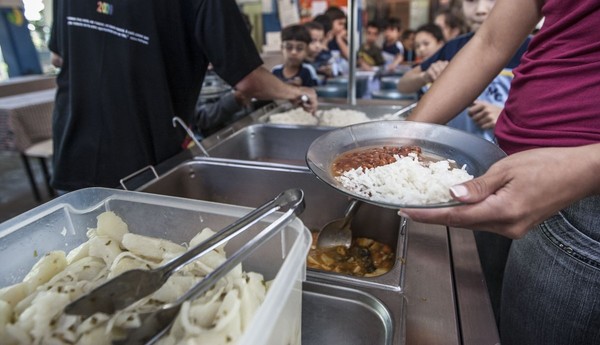
Approximately 40 million students across Brazil's more than 5,000 municipalities receive at least one meal a day through the National School Feeding Program. From the Amazon to the Cerrado, from the Pantanal to the Atlantic Forest and from the Pampa to the Caatinga, a diversity of aromas and flavours strengthen bonds that transcend the biological act of eating, encompassing elements of political culture and bottom-up proposals for local development.
In schools, eating the "merenda," as school meals have been affectionately called by students for generations, nourishes the very experience of studying. From the "School Lunch Campaign" of the 1950s to the 2009 law enacting the National School Feeding Program, Brazilian civil society fought many battles to sustain a program based on the express guarantee of the human right to adequate food and nutrition. Today, its guidelines acknowledge the role of local markets and seek to ensure a diverse, culturally appropriate diet that is progressively free of ultra-processed foods, while reaching all students and schools of different ages across the country.
In this process, a notable achievement of Brazilian civil society is the minimum requirement of 30 per cent of public purchases to be made directly from family farmers, with priority given to women, indigenous peoples, Afro-descendant communities (quilombolas), and agrarian reform settlers. This collective experience brings with it a seemingly simple but potentially transformative perspective: fresh food, with less packaging and more peel, is healthier and better for the healthy growth and lives of students and their families. A huge amount of these types of foods comes from peasant agriculture, and their perishable nature makes them potentially cheaper and logistically easier to buy locally. Recognising this and making this process a reality must necessarily involve everyone’s participation – from farms to schools.
Beyond a public policy instrument, the vision embedded in these processes is that family farmers are highly capable of feeding their communities in a sustainable way. The state should learn from them and support them, promoting the link between their means of production and democratic conditions of access by families and communities – contributing to the human right to adequate food. In this sense, school feeding with direct purchases from family farms strengthens sustainability and the human right to adequate food, without neglecting the dimension of access.
There are ongoing challenges to this program in a deeply diverse, unequal, violent, racist country permeated by corporate interests. Farmers, and particularly indigenous farmers and those from traditional communities, do not all enjoy equal access to public procurement processes. Ensuring fresh food requires school infrastructure that does not always exist, such as regular drinking water and sufficient electricity for refrigerators and equipment. School cooks, essential to the proper functioning of the program, are often neglected by the system, facing precarious contracts and high staff turnover. Favouritism toward political allies and corruption in bids for larger purchases are still realities, although not exclusive to school feeding.
However, an important lesson from this experience is that government systems can be living organisms, fueled by relationships and collective political learning in a society that is constantly evolving. In politics, there is room for creativity, and it is these struggles that have built participatory systems and democratic mechanisms essential to guaranteeing rights in Brazil and around the world. For this reason, the progressive realisation of the human right to adequate food, at its best, draws inspiration from instruments like these. They also stand as practical examples which demonstrate that the fight for real food in schools and the broader struggle for food sovereignty are mutually reinforcing processes.
There is indeed a lot of power, a lot of culture, and a lot of life in a plate of food.
Learn more here:
FIAN Brazil documentaries on school meals and food procurement from indigenous peoples:
El Campo, el Río y los Pasos – Alimentación Escolar Indígena en Alto Solimões (subtitulado en español)
Short film on corporate capture of food systems: Cuarteto Indigesto – Nuestra Comida en Manos de Gigantes/Quarteto Indigesto – subtitulado en español
Short film on corporate capture of food systems The Indigestibles in English
- FIAN Brazil
Photo: School lunch program in Brazil. By Ubirajara Machado/FIAN Brazil
Informal food markets: Entry points for healthier cities
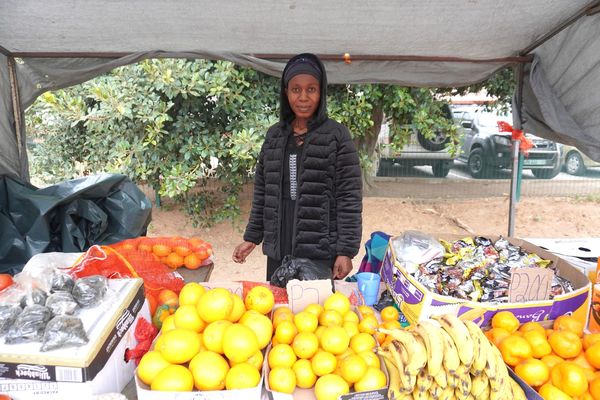
Public health is a complex equation, encompassing a wide range of factors. It’s not just about sanitation—it also includes mental health, community life, and access to nutritious, affordable food. Public health is equally a matter of workers’ rights.
Informal food markets are powerful entry points for comprehensive policies that address nutrition, labour conditions, and community strengthening. Preserving informal food markets in Global South cities can be a powerful public health strategy. Here’s why.
Street foods make a significant contribution to people’s energy and protein intake in many countries, particularly in rapidly urbanising areas. Street vendors often sell healthy, traditional foods that support a balanced diet for adults, teenagers, and children. A systematic review of studies conducted in 2013 and 2014, published by Cambridge University Press, found that “the majority of studies demonstrated that street foods contributed significantly to the diet of children and adults in developing countries, both in terms of energy, protein and micronutrient intakes and in terms of food groups consumed.”
Informal food markets can also play a key role in reducing undernutrition and preventing nutrition-related diseases such as obesity—often linked to the over-availability of ultra-processed food sold by multinational supermarket chains. Given this, making informal food markets safer, more accessible, and improving vendors’ working conditions should be seen as a crucial area for public health intervention.
A 2016 policy paper by the Institute of Development Studies, focusing on Sub-Saharan Africa (SSA), noted: “Many policymakers regard the informal sector as a barrier to development or believe that it will quickly disappear with the spread of supermarkets and centralised food value chains. However, available evidence suggests that most food in SSA countries will continue to be sold in informal markets for the next several decades.” For this reason, policy interventions that centre on informal food markets are generally among the most effective tools.
The policy paper cites three strong examples: one case study describes how working with Nigerian vendors’ associations of butchers to provide training on food safety helped reduce meat-borne diseases. Another case study, focused on nutrition, concerns the iodisation of salt—an essential source of iodine, a micronutrient whose deficiency can cause serious health problems, including thyroid disorders. In Tanzania, working with informal vendors’ associations to provide access to iodisation equipment proved to be the most effective way to introduce iodine into people’s diets. These examples also highlight the importance of a bottom-up approach: involving actors from the informal economy as full subject-matter experts in policy and technical matters.
A final, and equally important point relates to community health in the broadest sense. Markets are vibrant meeting points that foster strong community ties—both among city residents and between urban consumers and the farmers who supply them. More than just places of trade, they serve as hubs for civic engagement, political discourse, and organising, offering spaces where ideas are exchanged alongside goods. In rapidly urbanising environments, these connections not only strengthen democracy but also provide a sense of belonging that supports mental well-being.
-StreetNet International
Photo: Food vendor in Gaborone, Botswana, 2022. By StreetNet
Supermarkets struggle to expand in Africa
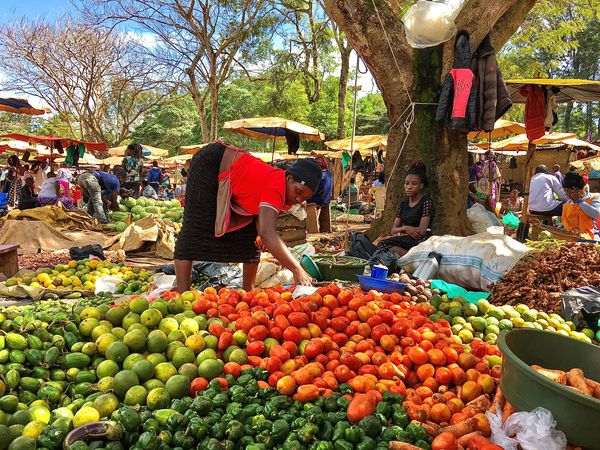
Diets in Africa are diverse, healthy and deeply rooted in tradition and culture. In Tanzania, for instance, researchers studying the traditional diet of people in the Kilimanjaro region found it had a positive impact on the body’s immune system and beneficial effects on markers of inflammation. African food cultures remain largely dependent on a rich network of small holder farmers and vendors who are equipped with indigenous knowledge systems to grow and process healthy foods.
Supermarkets have had a hard time building a business in this food landscape. Across the region, they continue to struggle with low numbers of shoppers and are frequently going out of business. Most Africans prefer to shop at open air markets for fresh produce and at smaller corner shops, such as the dukas in Kenya, obuduuka in Uganda, and spaza in South Africa, for packaged food items. All these are conveniently located within their neighbourhoods.
For example, over 90% of residents of Maputo, Mozambique purchase their foods through small vendors and only 8.7% of Ghanaians prefer to shop in supermarkets, while 73% of them turn to their traditional markets for foods.
Small vendors and corner shops offer Africans convenience of access, a personal and interactive experience, and easy credit. They also cater to the available spending power of their clientele. Supermarkets and shopping malls, on the other hand, are intimidating and usually expensive for most people on the continent.
Some supermarkets are now trying to mimic the small shops to attract more customers. In Dakar, Senegal, the French supermarket giant Auchan set up stores in lower income neighbourhoods near popular markets and started selling small bags of spices like Daakhaar (ginger), a technique used by small vendors. Auchan's actions angered local communities, who clearly saw the threat to their local markets. They launched a campaign to kick the company out of the country, called Auchan dégage.
Another tactic tried by supermarkets is to offer readymade, takeaway foods in cities, where these companies are eyeing a growing demand for quick and easy meals. But this is also coming up against problems. In Kampala, Uganda, for instance, 15 such operations were shuttered by authorities for failing to observe minimal food safety standards, after having been issued repeated warnings for serving foods "unfit for consumption".
Expanding malnutrition, expelling small vendors
The number of undernourished people in sub-Saharan Africa increased by 9 million between 2021 and 2022. The continent as a whole is home to 38% of the world's undernourished. Compounding this crisis are flawed policies that fail to consider the major role of local food producers, on the one hand, and, on the other, the complex role of ultra-processed foods (UPFs) within food insecurity.
As the African Centre for Biodiversity has pointed out, by overlooking systemic injustices and the critical connection between how food is produced and consumed, these policies promote the influx of cheap, nutrient-poor UPFs into both cities and rural areas, while at the same time undermining local food-producers and street vendors, essential for their community’s food security.
For the researchers in Tanzania mentioned above, there is now in a race against time to document and study the potential benefits of heritage diets across Africa before they disappear, as populations increasingly move to cities and adopt Western-style eating habits.
By criminalising street vendors, policies across Africa are paving the way for supermarkets, corporate chains, and ultra-processed foods (UPFs). This directly threatens the livelihoods of nearly 43% of Africans who depend on vending and is a potential threat to public health.
Despite these systemic barriers, vendors—primarily women and youth—remain the bedrock of Africa's food landscape, supplying its most beloved meals. They are not just sellers but crucial custodians of culture, safeguarding unique foodways for future generations.
-GRAIN
Photo: Creative Commons. Market in Uganda
News brief
The Tanzania Times
South African Supermarket chain, Shoprite, exits its seventh country citing financial losses and a need to focus on its core South African market. In recent years, Shoprite has closed its doors in the Democratic Republic of Congo, Madagascar, Uganda, Kenya, Nigeria and Ghana. While South Africa has the highest concentration of supermarkets in Africa, the supermarket model of business is struggling to operate in the rest of Africa where shoppers still prefer their next door shops and open air markets.
Justicia Alimentaria
Justicia Alimentaria launched a campaign to reclaim municipal markets in Spain. The government policy encourages private management of municipal markets and introduces supermarkets into them, which creates unfair competition. The campaign calls for regaining public control of municipal markets as an essential requirement to return to their original function of providing healthy, affordable, and local food to the communities. (original article in Spanish)
Gregory Meyer, Financial Times
Walmart has boosted revenues by over $150 billion whilst cutting 70,000 of its global employees in the last five years. The company anticipates that further automation and AI advancement will maintain this trend. The United Food and Commercial Workers criticised Walmart for squeezing more output from each hour of labour while expanding sales faster than wages.
Rommel H. Ojeda, Documented
In New York City, street food vendors are at risk of deportation, as the mayor vetoed an important legislative proposal to decriminalise their activities. Statistics showed that street vending-related criminal tickets had increased ever since the current mayor took office in 2022, forcing many food vendors to leave the industry to avoid prosecution and resulting in collateral immigration consequences.
Barry Christianson, Mongabay
Home deliveries of food and groceries have surged in South Africa. The deliveries are overwhelmingly done using motorcycles, but recently an increasing number of electric bicycles have hit the scene. To date, about 600 food-delivery couriers are renting e-bikes from a company called Green Riders to service the growing demand. Their appearance presents prospects for transitioning to a greener food delivery sector.